
Skip to content
INNOVATIVE SENSING SOLUTIONS · AFRICA+27 11 557 9200
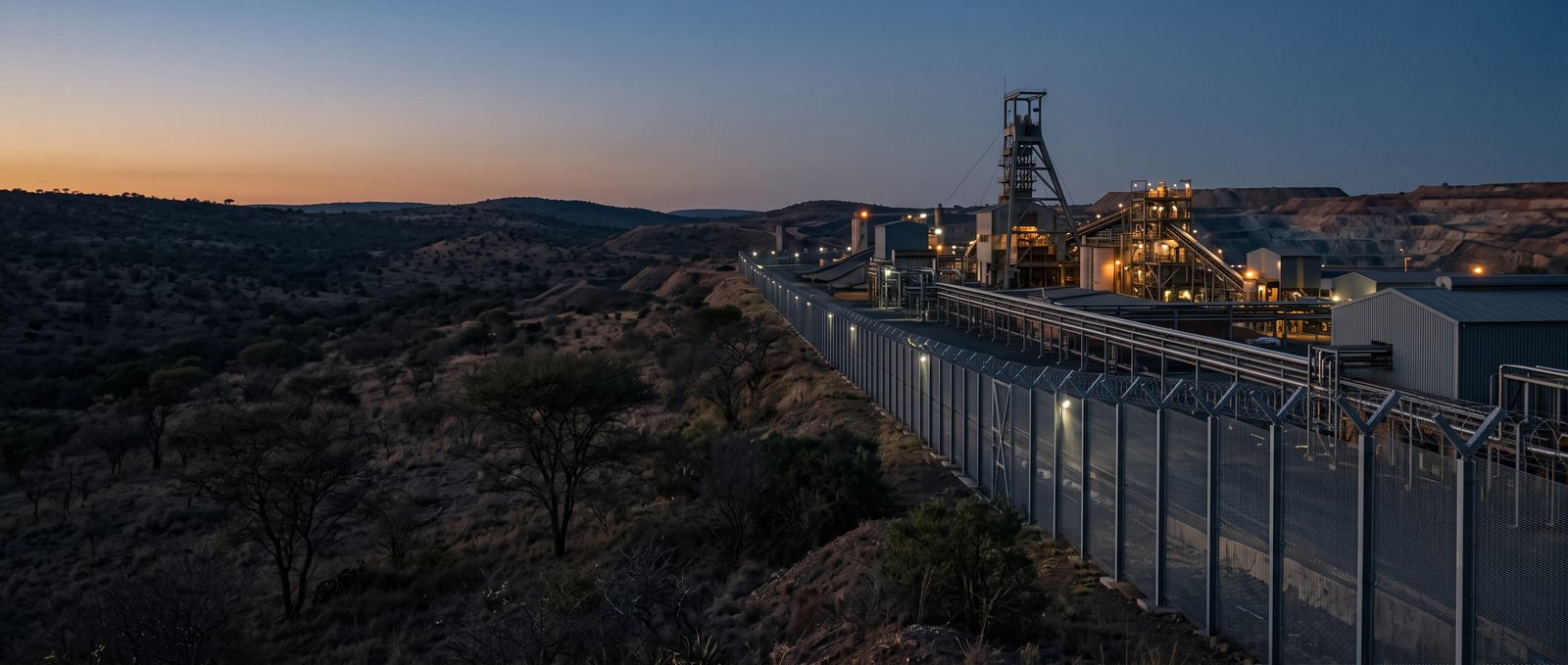
South African mining complex at dusk, with a fenced perimeter and industrial infrastructure
PERIMETER & CRITICAL INFRASTRUCTURE SECURITY

GoThermal Fibre Optic Intrusion DetectionDetect the threat.
Direct the response.

Protect high-risk perimeters, buried copper cables and pipelines. Turn a located intrusion or digging alarm into an informed response, with optional DJI Dock-enabled aerial verification.

Located alarmsClassified eventsFlightHub 2 compatible
01 /
Fence-mounted PIDSDetect climbing, cutting and tampering.
02 /
Infrastructure protectionDetect digging and pipeline interference.
03 /
DJI Dock-enabled responseBring aerial verification to the alarm location.
Designed around
high-risk sites
MinesNational key pointsAirportsFarmsUtilitiesMunicipalities
PROTECT MORE THAN THE BOUNDARY

Your fence is visible.
Your infrastructure
is just as vulnerable.

A cut fence, unauthorised excavation or interference with a pipeline can put an entire operation at risk. GoThermal brings these threats into one connected security strategy.

What is fibre optic intrusion detection?
It uses a fibre optic sensing cable to detect disturbances along a protected fence, buried route or pipeline. A sensing system analyses the activity and reports its location so your security team can verify the event and direct a response.

THREE WAYS TO PROTECT

Different assets.
The right sensing approach.

Each installation is engineered for its environment. Fence, buried and exposed-pipeline sensing are distinct applications, not interchangeable layouts.

Welded-mesh perimeter fence with a dark sensing cable clipped along the mesh01 / PERIMETER
FENCE-MOUNTED FIBRE DETECTION

Make your fence
a sensing boundary.

A fibre sensing cable mounted to the fence detects disturbances associated with climbing, cutting and tampering. Pinpoint the alarm location, verify the incident using integrated CCTV or an optional responding drone, and direct your security team to the affected area.

  • High-risk perimeter intrusion detection systems (PIDS)
  • Alarm location mapped to the protected boundary
  • Integration with CCTV and security operations
Excavator digging across a dry infrastructure corridor near a utility installation02 / BELOW GROUND
BURIED CABLE & PIPELINE PROTECTION

Detect the digging.
Before the theft.

Sensing fibre positioned above buried copper cables or pipelines can detect digging before the protected asset is reached. Focus your response on activity threatening the infrastructure, not simply movement nearby.

  • Early warning of digging and excavation activity
  • Copper cable theft and pipeline interference protection
  • Pedestrian and vehicle activity filtering for this application
Exposed steel pipeline on supports, with dark armoured sensing cable running underneath03 / ABOVE GROUND
ARMOURED FIBRE PIPELINE SENSING

Put a sensing layer
under your pipeline.

Armoured fibre sensing cable attached underneath an exposed pipeline monitors disturbances associated with interference and tampering. Mounting and signal coupling are designed for the actual pipeline and site.

  • Above-ground pipeline protection
  • Armoured fibre attached along the pipe underside
  • Located alarms for verification and response
THE DETECTION-TO-RESPONSE CHAIN

A disturbance becomes
an actionable alarm.

The fibre senses physical activity. The system analyses the event, relates it to the site map and passes the location and alarm classification to your response systems.

Concept diagram showing fence-mounted fibre, buried fibre above protected infrastructure, armoured fibre under an exposed pipeline, and their connection to analysis and mapped alarms
Depth, routing, mounting and sensing performance are determined through site design and commissioning. On mobile, swipe the diagram to explore.
  1. Sense

    Fibre responds to disturbances along the protected fence, route or pipeline.

  2. Analyse

    Configured detection parameters help distinguish relevant activity from routine disturbance.

  3. Locate & classify

    The event is related to the site map, with live coordinates and an alarm classification.

  4. Verify

    Use control-room tools, CCTV or optional DJI Dock-enabled aerial verification.

  5. Respond

    Give operators and ground teams the location and context needed to act.

Detect the activity
that matters to your site.

For buried cable and pipeline protection, parameters are configured to prioritise digging and excavation while filtering routine walking and vehicle movement. Other buried installations can deliberately target people or vehicles. Site conditions and commissioning determine the appropriate configuration.

OPTIONAL DJI DOCK RESPONSE

The alarm tells you where.
The drone helps you see.

DJI FLIGHTHUB 2 COMPATIBLE

The GoThermal SDK provides live event coordinates and alarm classifications to connected systems. Integrate these into a FlightHub 2 response workflow to direct a Dock-based aircraft to the reported incident location.

ALARM → AERIAL VERIFICATIONDETECTION-TO-RESPONSE WORKFLOW
Detection-to-response mapA perimeter alarm location and a drone dock connected by a response route.PROTECTED SITEINFRASTRUCTUREREPORTED ALARM LOCATIONDJI DOCK
01 / Detect the disturbance

A configured sensing installation detects an intrusion, digging or pipeline-tampering event along the protected asset.

DJI DOCK 3DJI Dock 3 with its dock-compatible aircraft

Your first aerial responder.
Not another blind alarm.

View the incident with a suitable visual or thermal aircraft. Support deterrence with compatible spotlight or speaker payloads where fitted, and coordinate the ground response with better situational awareness.

Explore DJI Dock with GoUAV

An alarm is an input, not permission to fly. Dispatch follows the site's approved operational workflow and flight permissions, including aircraft readiness, weather and airspace checks. Airports and other restricted areas require specific assessment. No universal arrival time or unrestricted automatic launch is implied.

Verification at the reported location

Give the operator a view of the incident, rather than just a point on a map.

Deterrence with the right payload

Use supported lighting or audio capabilities where fitted and authorised.

A detection system that stands alone

Start with fibre sensing and control-room integration. Add drone response when appropriate.

BUILT AROUND THE RISK

For sites where
an intrusion has
real consequences.

From a mine perimeter to a municipal cable corridor, design the protection around the asset, the threat and the response capability.

Mines & processing sites

Protect perimeter fences, exposed pipelines and vulnerable buried infrastructure serving the operation.

National key points

Integrate perimeter and infrastructure alarms into coordinated critical-site security operations.

Airports

Detect activity along high-risk boundaries. Drone operations are separately assessed for airspace and site permissions.

Farms & estates

Monitor vulnerable boundary sections and infrastructure routes, with a response suited to the property.

Utilities & energy

Detect excavation threatening cable and pipeline corridors, and interference with above-ground pipelines.

Municipalities

Protect service infrastructure against digging, theft and tampering that can disrupt communities.

  1. 01 /

    Understand the asset and the threat

    Assess the fence, infrastructure route or pipeline, the expected intrusion activity and the site's routine disturbances.

  2. 02 /

    Engineer the sensing installation

    Specify suitable fibre, routing, mounting or burial layout, system architecture and the required alarm-location approach.

  3. 03 /

    Connect verification and response

    Define event outputs, location mapping, control-room integration, cameras and optional FlightHub 2 response workflows.

  4. 04 /

    Commission against site conditions

    Tune the detection parameters and test representative intrusion or digging activity alongside routine movement and environmental disturbance.

ENGINEERED, NOT ONE-SIZE-FITS-ALL

Good detection starts
with good site design.

Coverage, alarm localisation and nuisance-alarm performance depend on the selected architecture and installation. We define those requirements before making model-specific commitments.

The objective is an alarm your team can act on, with the right location information and a practical verification path.

GoThermal solution overviewApplications, sensing layouts and DJI-enabled response
PLAIN ANSWERS

Fibre intrusion detection,
explained.

Understand the sensing applications, how alarms reach other systems and where optional aerial response fits.

Discuss your site requirements
What is a perimeter intrusion detection system (PIDS)?

A PIDS detects unauthorised activity at a site's boundary. In a fence-mounted fibre system, a sensing cable responds to disturbances associated with climbing, cutting or tampering and reports an alarm for verification and response.

How does fibre sensing help protect buried copper cables?

Sensing fibre positioned above the protected copper route can detect digging before the copper cable is reached. The layout, soil conditions and detection settings must suit the site. Nearby existing fibre is not automatically a suitable sensing installation.

Can it protect buried and above-ground pipelines?

Yes. Buried sensing fibre can detect digging that threatens a pipeline corridor. For an exposed pipeline, armoured fibre sensing cable is attached underneath the pipe to monitor interference or tampering. These are different installations. The solution described here is not a pipeline leak-detection claim.

Will walking and vehicles cause infrastructure alarms?

The buried system can detect pedestrian and vehicle activity. For cable and pipeline protection, detection parameters are generally configured to filter routine movement and prioritise digging. Other buried applications can deliberately target people or vehicles. Commissioning is essential to establish the configuration for the site.

Can an intrusion alarm direct a DJI Dock drone to the incident?

Yes. The GoThermal solution is compatible with DJI FlightHub 2, and the API provides live coordinates and alarm classifications to connected systems. A configured response workflow can direct a Dock-based aircraft to the reported location, subject to the approved flight workflow, aircraft readiness, weather, airspace and operating permissions.

Do I need a DJI Dock to use fibre intrusion detection?

No. Fibre detection can operate with control-room systems, cameras and ground response teams. DJI Dock-enabled aerial verification is an optional response layer that can be added where operationally appropriate.

Can the system integrate with CCTV and other security systems?

Yes. Integration options depend on the selected system and application. The SDK can provide live event coordinates and alarm classification. We define the required event interfaces, mapping and verification workflow during solution design.

How accurately is an intrusion located, and how long a route can be protected?

Accuracy and coverage are model- and installation-specific. Zone-based and pinpoint architectures do not provide identical location information. We confirm the sensing layout, location method, optical constraints and field requirements before specifying a coverage distance or localisation figure.

Is “fiber intrusion detection” different from “fibre intrusion detection”?

No. Fiber is the US spelling and fibre is the spelling commonly used in South Africa. Both describe the same category of fibre optic intrusion detection technology.

LET'S DESIGN YOUR PROTECTION

Tell us what
you need to protect.

Discuss your perimeter, cable route or pipeline with GoThermal. We will help define the sensing approach and the verification and response layers your site needs.

  • Your site type and location
  • Fence, buried cable, buried pipeline or exposed pipeline
  • Approximate perimeter or route length
  • Existing cameras, control room and interest in DJI Dock response

Request a site assessment

Use GoThermal's enquiry form to share your project requirements. No sensitive site plans or security layouts are required at this stage.

See our privacy policy for information about how enquiry data is handled.

For confidential plans and critical-site details, ask us to arrange an appropriate secure sharing method.
Request a site assessment Call